
When I first started learning web development, I spent more time searching for learning resources than actually writing code.
Every day, I asked AI which course, book, or website I should use next. Instead of making progress, I became trapped in an endless cycle of comparing options.
Although thousands of learning resources were available, only a handful truly matched the way I learn.
I soon realised that my experience wasn’t unique. Many beginner web developers struggle to balance the abundance of online resources with consistent practice.
In one of his YouTube videos, Feel-Good Productivity author Ali Abdaal draws on Lean Learning to explain why many people spend too much time researching before they even begin. He suggests that getting started requires less information than we often think, and that meaningful learning comes from taking action rather than endless preparation. His explanation helped me realise that I didn’t need to find the perfect learning resource—I simply needed to start building. If you’d like to explore his perspective further, I recommend How to Stop Overthinking (and Finally Achieve Your Goals).
Rather than building projects, I was trying to find the perfect resource.
The solution wasn’t to consume more information. It was to become more selective.
Why We Keep Searching Instead of Building
It’s natural to believe that one more search will uncover the perfect course, book, or tutorial.
When we’re surrounded by articles, online courses, YouTube videos, and AI recommendations, every new option feels like it might be better than the last.
In reality, every additional option requires another decision. Over time, those decisions consume the mental energy that could be spent learning and practising.
If you’ve ever felt overwhelmed by endless choices, you might also enjoy Why Too Many Choices Make It Hard to Take Action, where I explore how information overload can quietly drain your focus and make it harder to act.
The challenge isn’t eliminating information altogether. It’s creating a simple system that limits unnecessary decisions and protects your focus.
Once I understood this, I changed the way I chose learning resources. Three small changes made the biggest difference.
1. Define What Makes a Good Learning Resource
The first step is to identify the characteristics of a resource that genuinely suits your learning style.
Looking back, I realised I learned best from resources that combined theory with practical examples.
I also discovered that I preferred logical, structured explanations. Resources that relied heavily on motivation or emotional language often distracted me from understanding the subject itself.
Over time, I naturally preferred books and websites that allowed me to learn at my own pace rather than lecture-style content that presented information in only one way.
Eventually, I created a simple checklist:
- Combines theory with practical exercises
- Explains concepts logically
- Lets me learn at my own pace
Having these criteria made choosing resources much easier.
2. Set a Time Limit for Choosing
Once you’ve defined your criteria, give yourself a fixed amount of time to search.
Instead of endlessly comparing resources, evaluate each one against your checklist and decide within an hour.
If you find a resource that meets your standards, stop searching.
If you don’t find a perfect match, choose the best option you’ve found so far and begin learning.
When I was looking for a free course to learn programming fundamentals, I limited myself to one hour.
During that time, I compared platforms such as freeCodeCamp and Codecademy against my checklist instead of continuing to search for more alternatives.
Within an hour, I had chosen a course and could spend the rest of my time learning instead of deciding.
3. Commit to One Resource
After making your decision, commit to using one primary learning resource.
Switching constantly between courses, tutorials, and articles creates unnecessary mental effort because you’re repeatedly adapting to different teaching styles and structures.
Focusing on one resource allows you to build knowledge more consistently and spend less energy deciding what to study next.
In my own learning journey, sticking with one primary resource helped me make far more progress than constantly jumping between multiple platforms.
Consistency proved far more valuable than variety.
Spend Less Time Searching and More Time Building
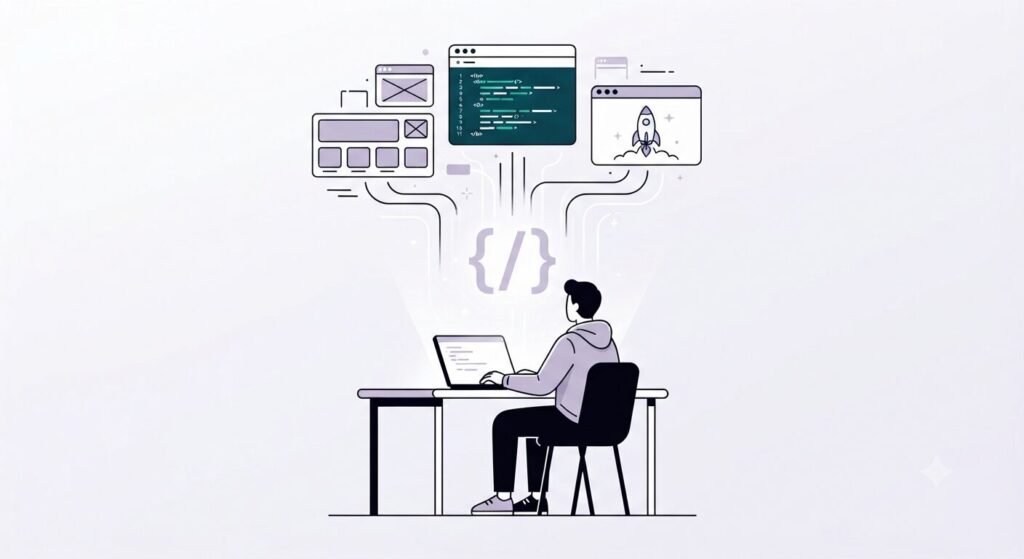
At the beginning of my web development journey, I believed that finding the perfect learning resource would help me learn faster.
Instead, the endless search became the biggest obstacle to making progress.
Understanding why I kept researching instead of building changed the way I approached learning. Rather than chasing every recommendation, I focused on choosing one suitable resource and putting my energy into practice.
The internet offers more learning resources than ever before, but more choice doesn’t always lead to better learning. The same pattern appears beyond learning resources. In How Modern Cities Quietly Drain Your Mental Energy, I explain how constant exposure to information, decisions, and stimulation can gradually wear us down.
By defining your criteria, limiting the time you spend searching, and committing to one resource, you can reduce decision fatigue, avoid unnecessary cognitive overload, and spend more time doing what matters most: building.